
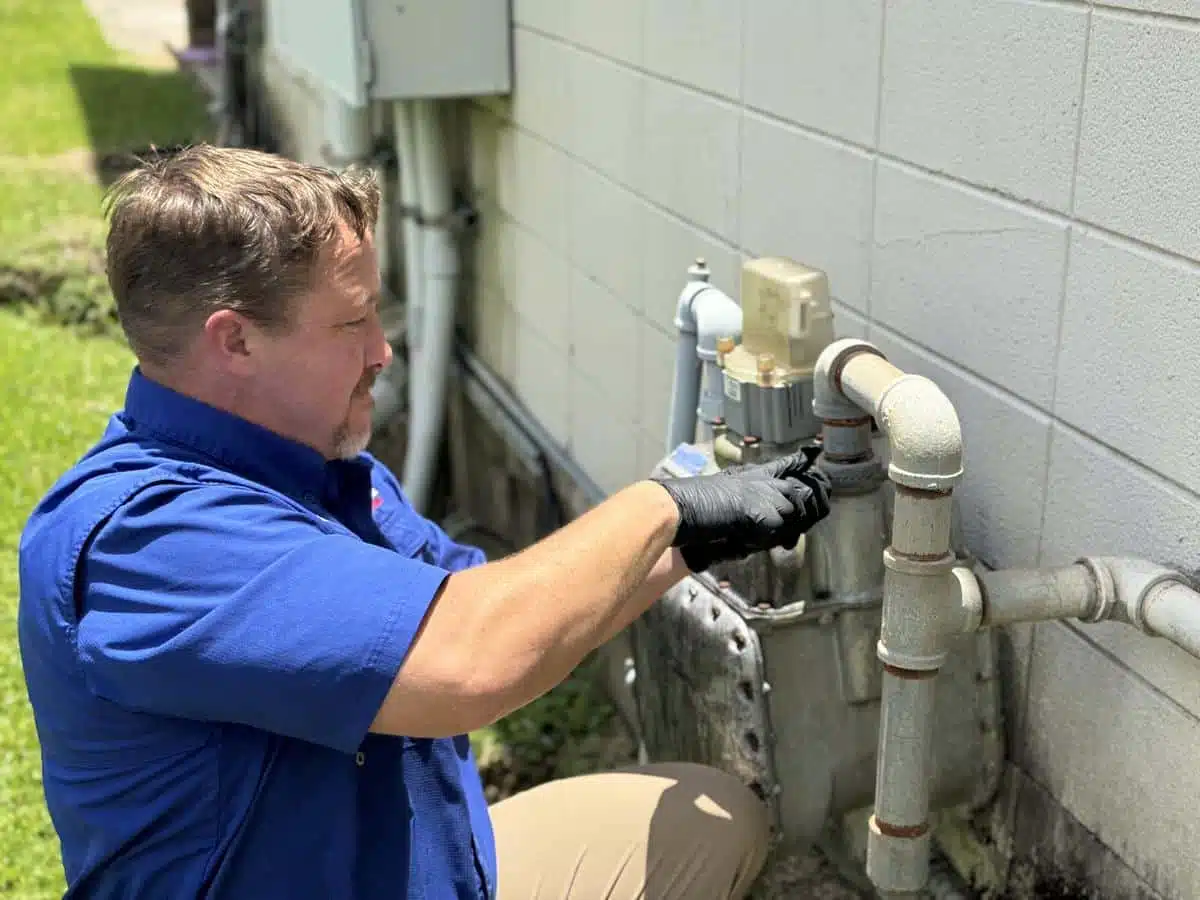
Bob Vila put together a guide to the pipes inside a house, and staff writer Glenda Taylor asked Travis Hargrave, plumber and owner of Hargrave’s Plumbing, to walk through them. The article, “11 Types of Plumbing Pipes and When to Use Them,” was last updated July 24, 2026, and Travis is quoted on seven of the eleven.
Most homeowners never think about pipe material until something leaks. Here is the short version of what Travis told Bob Vila, sorted into the pipes you expect to find in a newer house and the ones that deserve a closer look in an older Acadiana home.
The Pipes in Most Newer Homes
Start with the white one. “This is the most common and usually pictured in mind when people think of plumbing pipes,” Travis said of PVC. “It’s commonly used for both sewer and wastewater lines.”
For the water supply in new construction, it is PEX. “This is arguably the most common water pipe installed in new homes nowadays,” Travis told Bob Vila. “Typically, the pipes are colored blue or red to indicate hot or cold. This piping connects by using compression rings, but a specific tool is needed to compress the rings.” The article adds that PEX comes in A, B, and C grades that differ in flexibility, and that rodents can chew through it.
Copper is the long lived option. Travis said it is “most commonly used as water piping, but it’s rarely used as drain pipes despite the corrosion-resistant material and long lifespan.” CPVC, per the article, sits between the plastics and copper: it handles hot water and is cheaper than copper.
ABS, and Why Some States Restrict It
ABS is the black plastic drain pipe. Travis explained that it “isn’t universally banned, but some states, such as California, don’t allow it due to batch problems in the ’80s. Also, it has trouble with high temps and sunlight exposure, so it’s primarily used on sewers in the homes.” Kept out of the heat and the sun, it does its job.
The Warning Signs in an Older House
This is the part of the article that matters most around Lafayette, where plenty of homes were plumbed long before anyone had heard of PEX.
Galvanized steel. Travis called it “common on older homes as water pipe, but now it is most often used on gas.” The article explains why it left water service: the zinc coating wears away, the steel rusts, and old runs can leak or burst when the pressure changes. Rusty water, weak pressure at one fixture, and pinhole leaks on gray threaded pipe are the usual tells.
Cast iron. “Common in old homes and large commercial buildings, it is heavy duty and durable,” Travis said. “Old homes often had lead joints to lock these together. Cast iron has also been used as sewer pipe in the past.” Durable is not the same as permanent. Old cast iron drains corrode from the inside and narrow over the years, which is why a camera is worth sending down before a slow drain turns into a backup.
Polybutylene. This is the gray plastic supply line that went into homes from the 1970s into the 1990s. The article notes that production stopped in 1996, that the material breaks down from the inside where you cannot see it, and that it should be replaced as soon as possible.
What Carries the Gas
Two of Travis’s answers were about gas, which matters in a region where plenty of homes cook, heat water, and run standby generators on it. Galvanized, as he said, now mostly carries gas. Black iron is used only for gas today, and Travis told Bob Vila why contractors reach for it: “Typically, it is cheaper than galvanized pipe, which is why contractors often use it when installing new gas lines.”
Gas piping is not a weekend project. If you smell gas, get out of the house and call your gas utility from outside, then have a licensed plumber handle the gas leak detection and repair. New runs for a range, a water heater, or a generator go through our gas piping team.
The Rest of the List
The article rounds out the eleven with HDPE, a flexible plastic used for underground service lines, and stainless steel, which it recommends for coastal and other corrosive settings. Neither turns up often inside a house, but both are worth knowing by name.
When Old Pipe Needs to Go
If a home inspection report mentions galvanized or polybutylene, or you keep patching the same stretch of pipe, the conversation usually turns from repairs to re-piping. On the drain side, a sewer camera inspection shows what the old cast iron under the slab actually looks like before anyone talks about digging.
Thanks to Bob Vila
Thanks to Glenda Taylor and the Bob Vila team for including Travis in a guide homeowners will keep coming back to. The full article is at Bob Vila.
Not Sure What Is in Your Walls? Call Hargrave’s
If you bought an older home, or you are seeing rusty water, weak pressure, or the same leak twice, we can tell you what you have and what it needs. Our team works on water, drain, and gas piping across Acadiana. Get in touch and we will send someone out.


